
3,000–3,500+ Cycle LFP Shortlist
Best 1000Wh LiFePO4 Portable Power Stations (2026).
True 1kWh LiFePO4 stations—plus adjacent 768Wh travel boxes and 1.5kWh high-surge step-ups—evaluated on usable runtime math, continuous inverter ceilings, solar intake, and verified owner failure watchouts.
Direct Verdict · 1kWh Class
Which 1000Wh LiFePO4 station wins in 2026?
BLUETTI AC180 (1,152Wh / 1,800W) takes #1 overall for extra base capacity and active verified retail tracking, while EcoFlow DELTA 2 (27.0 lb) wins when featherweight car-loading and modular expansion outweigh quieter charging acoustics.
How we evaluated & master matrix
8 LiFePO4 picks compared side by side.
Every station below is filtered strictly to LiFePO4 (LFP) chemistry rated for 2,500 to 3,500+ cycles so emergency readiness does not degrade rapidly across years of partial standby use. We compare listed watt-hours alongside continuous (not merely millisecond peak) AC watts and weight per deliverable watt-hour.
| Rank & Model | Capacity (85% Usable) | Continuous AC (Surge) | LFP Cycles | Weight |
|---|---|---|---|---|
| #1 BLUETTI AC180 Portable Power Station | 1,152 Wh (~979 Wh) | 1,800 W | 3,500+ (LFP) | ~35.3 lb |
| #2 EcoFlow DELTA 2 Portable Power Station | 1,024 Wh (~870 Wh) | 1,800 W (2,700 W) | 3,000+ cycles | 27 lb |
| #3 Anker SOLIX C1000 Portable Power Station (Black) | 1,056 Wh (~898 Wh) | 1,800 W | 3,500+ (LFP) | ~35.3 lb |
| #4 VTOMAN Jump 1000 Portable Power Station | 1,408 Wh (~1,197 Wh) | 1,000 W (2,000 W) | 3,100+ cycles | 37.5 lb |
| #5 Pecron E1500LFP Portable Power Station | 1,536 Wh (~1,306 Wh) | 2,200 W (4,400 W) | 3,500+ cycles | 39.7 lb |
| #6 VTOMAN FlashSpeed 1500 Fast Charging Power Station | 1,548 Wh (~1,316 Wh) | 1,500 W (3,000 W) | 3,100+ cycles | 40 lb |
| #7 Anker SOLIX C800 Plus Outdoor Power Station | 768 Wh (~653 Wh) | 1,200 W (1,600 W) | 3,000+ cycles | 24 lb |
| #8 Bluetti AC70 Portable Power Station | 768 Wh (~653 Wh) | 1,000 W (2,000 W) | 3,500+ cycles | 22.5 lb |
Picks #1–#4
Core 1kWh–1.4kWh leaders.
Best suited for: All-purpose home outage backup, camping refrigerators, and quiet CPAP + router weekends
Bluetti · Ref B0CG3D72QC
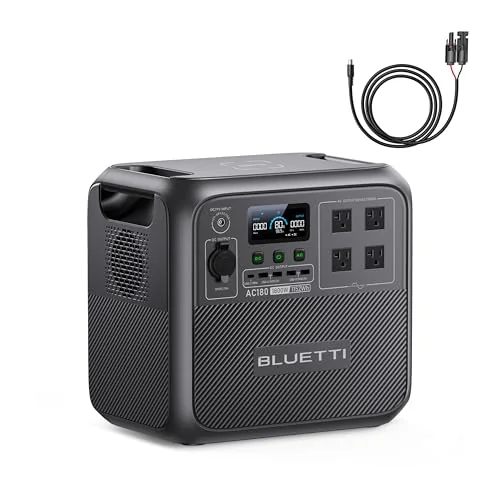
#1. BLUETTI AC180 Portable Power Station
Combines a 1,152Wh LiFePO4 battery with an 1,800W continuous pure-sine inverter, delivering roughly 12.5% extra usable energy headroom over standard 1,024Wh competitors for refrigerators, microwaves, and CPAP gear.
- Capacity
- 1,152 Wh
- Continuous AC
- 1,800 W
- Chemistry
- LiFePO4
- Selected package
- Single power station
Why it makes the shortlist
Active verified merchant support via PartnerBoost US (`B0CG3D72QC`), high buyer rating history (4.5★ across 2,660 Amazon ratings), and 3,500+ cycle LiFePO4 chemistry without heavy pro-series bulk.
Buyer watchout
Confirm listing title explicitly says AC180 (1,152Wh) rather than AC180P (1,440Wh); critical 1★ owner reviews also warn that heavy 12V DC cooler plugs run warm under sustained 10A car-socket draw.

Best suited for: Apartments, emergency storm kits needing fast wall top-ups, and expandable camping rigs
EcoFlow · Ref B0B1848R2B
#2. EcoFlow DELTA 2 Portable Power Station
At 27.0 lb and 1,024Wh, DELTA 2 trades AC180’s slightly larger base pack for faster ~50-minute 0–80% wall recharging and modular expansion up to 3,040Wh via extra batteries.
- Capacity
- 1,024 Wh
- Continuous AC
- 1,800 W
- Chemistry
- LiFePO4
- Weight
- 27 lb
Why it makes the shortlist
Unlike fixed-capacity rivals such as AC180, DELTA 2 lets apartment and overlanding buyers start light at 27 lb today and scale capacity later for longer blackouts.
Buyer watchout
Thermal cooling fans ramp noticeably above ~800W AC charge/discharge draw, whereas BLUETTI AC180 stays calmer under quiet indoor charging modes.
Best suited for: Overlanding drawer systems, storm closets, and high-solar daytime replenishment
Anker · Ref B0GR9H79KS
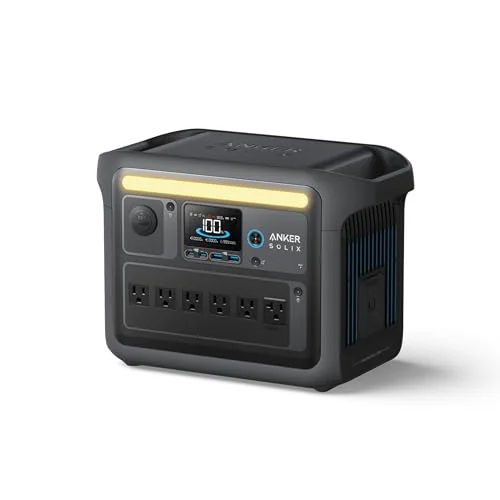
#3. Anker SOLIX C1000 Portable Power Station (Black)
Anker SOLIX C1000 matches EcoFlow DELTA 2’s 1,800W continuous inverter and 1,056Wh LFP capacity while tightening chassis overhang for narrow SUV cargo boxes.
- Capacity
- 1,056 Wh
- Continuous AC
- 1,800 W
- Chemistry
- LiFePO4
- Selected package
- Single power station
Why it makes the shortlist
Stands out for dual 100W USB-C ports, crisp front-facing AC spacing, and 600W solar input headroom compared with 500W-capped 1kWh alternatives.
Buyer watchout
Double-check exact Amazon ASIN `B0GR9H79KS` (original C1000) rather than similarly named Gen 2 or expansion-bundle listings with different XT60 accessories.
Best suited for: Overnight storm standby, steady <600W medical/office backup, and winter roadside preparedness
VTOMAN · Ref B09V1DJQ7D
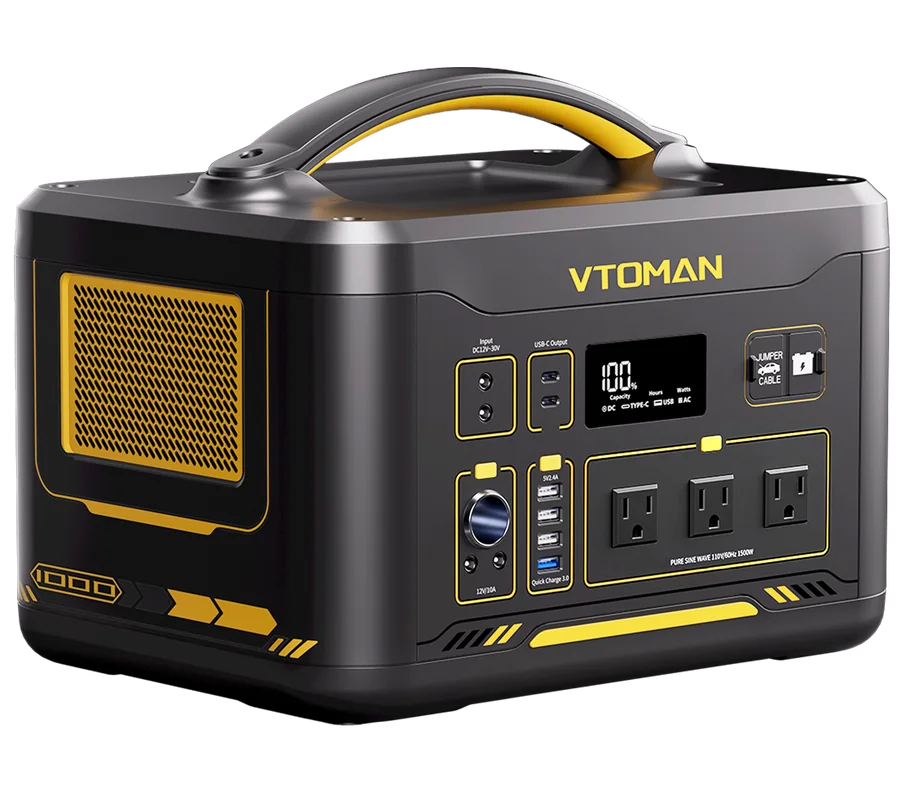
#4. VTOMAN Jump 1000 Portable Power Station
Steps up to 1,408Wh LiFePO4 (37.5 lb) for long overnight CPAP and 12V fridge autonomy, trading BLUETTI AC180’s 1,800W inverter ceiling down to a 1,000W continuous limit.
- Capacity
- 1,408 Wh
- Continuous AC
- 1,000 W
- Chemistry
- LiFePO4
- Weight
- 37.5 lb
Why it makes the shortlist
Extra ~384Wh storage over standard 1,024Wh units stretches low-watt emergency lighting, router, and medical-device holdover significantly further, plus adds a dedicated 12V vehicle jump-start port.
Buyer watchout
Its 1,000W AC ceiling and 200W solar input limit mean coffee makers, space heaters, and full-day rapid solar recovery fall behind DELTA 2 and AC180.
Picks #5–#8
1.5kWh high-surge & lightweight 768Wh alternatives.
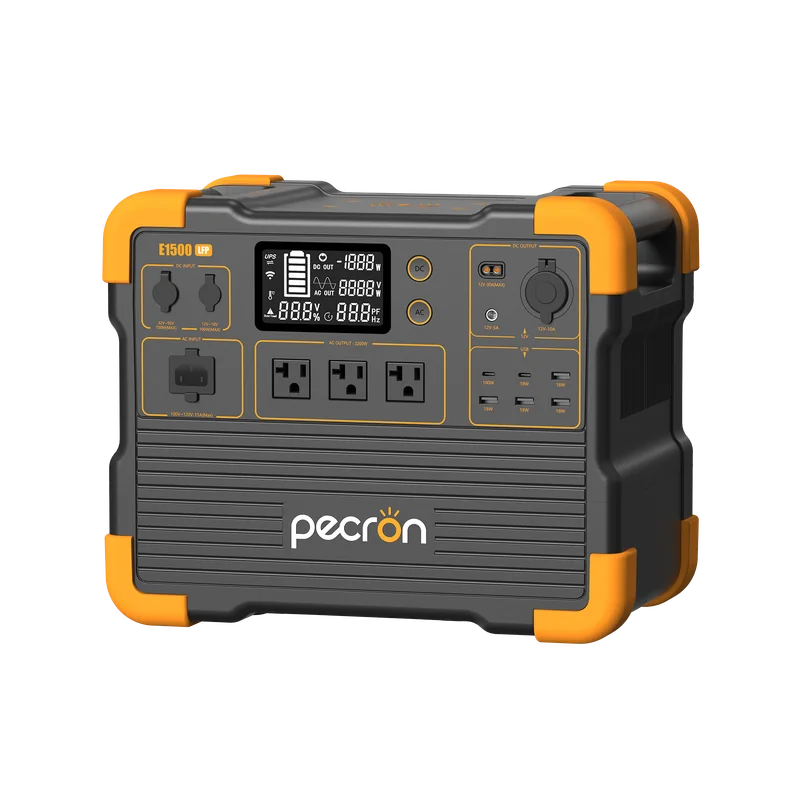
Best suited for: Workshop tools, chest freezers, and value-driven buyers stepping just above the 1kWh ceiling
Pecron · Ref B0B1C4Q7KM
#5. Pecron E1500LFP Portable Power Station
Pecron E1500LFP packs 1,536Wh LiFePO4 capacity and a heavy-duty 2,200W continuous inverter (4,400W surge) into a 39.7 lb frame built for inductive loads.
- Capacity
- 1,536 Wh
- Continuous AC
- 2,200 W
- Chemistry
- LiFePO4
- Weight
- 39.7 lb
Why it makes the shortlist
Compared with 1,800W 1kWh stations (#1–#3), E1500LFP adds 400W of continuous inverter margin that prevents NuWave plates, miter saws, and sump pumps from tripping overload protection.
Buyer watchout
Compared with EcoFlow and Anker ecosystems, Pecron’s mobile app UI is sparser and cooling fans stay more audible when pushing sustained >1,500W AC output.
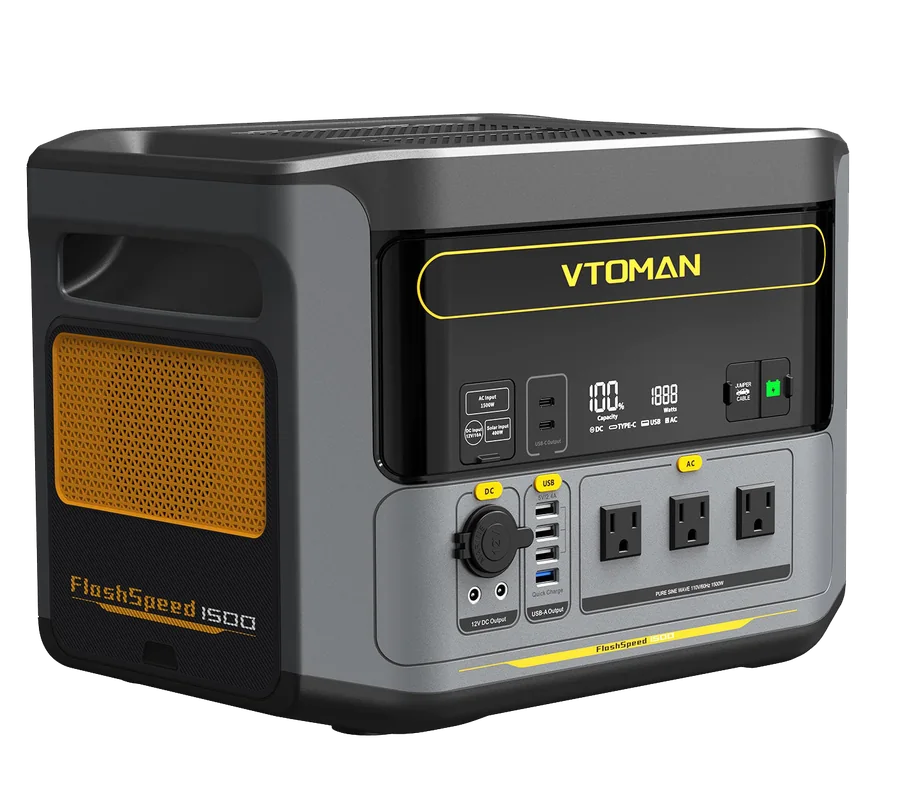
Best suited for: Garage power banks, kitchen refrigerator bridge power, and dual-port quick wall recharging
VTOMAN · Ref B0C7GZ1M3M
#6. VTOMAN FlashSpeed 1500 Fast Charging Power Station
Offers 1,548Wh LiFePO4 storage and 1,500W continuous AC (3,000W surge) at 40.0 lb, trading Pecron E1500LFP’s 2,200W inverter peak for 3,100-cycle VTOMAN expandability and rapid AC wall input.
- Capacity
- 1,548 Wh
- Continuous AC
- 1,500 W
- Chemistry
- LiFePO4
- Weight
- 40 lb
Why it makes the shortlist
Unlike bulky 2kWh frames over 60 lb, FlashSpeed 1500 stays liftable in one carry while supplying ~50% more base energy than typical 1,024Wh rivals.
Buyer watchout
Heavy 40.0 lb weight is less practical for daily camp tent hauling compared with 27 lb EcoFlow DELTA 2 or 22.5 lb BLUETTI AC70.
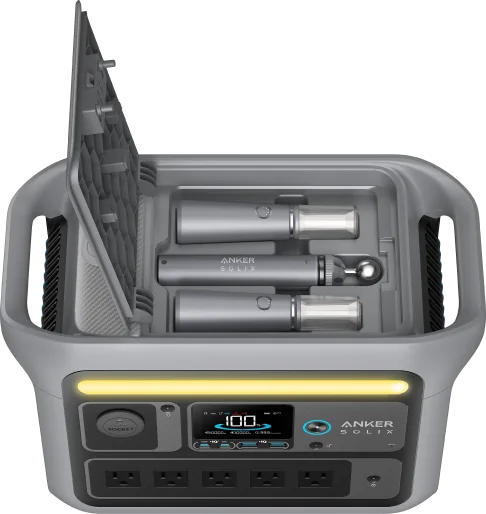
Best suited for: Weekend campers, tailgates, and mobile remote workers wanting sub-25 lb convenience
Anker · Ref B0CL9NDK68
#7. Anker SOLIX C800 Plus Outdoor Power Station
Although smaller at 768Wh / 1,200W (24.0 lb), C800 Plus earns a value slot alongside 1kWh units by combining LiFePO4 durability with integrated telescoping camp light storage.
- Capacity
- 768 Wh
- Continuous AC
- 1,200 W
- Chemistry
- LiFePO4
- Weight
- 24 lb
Why it makes the shortlist
Versus heavier 35–40 lb 1kWh+ stations, C800 Plus saves 11–16 lb in carry weight while still running full 1,200W coffee makers or induction skillets in short bursts.
Buyer watchout
After 85% usable conversion (~653Wh), high-watt cooking appliances drain a 768Wh pack roughly 35% faster than BLUETTI AC180’s 1,152Wh cell bank.
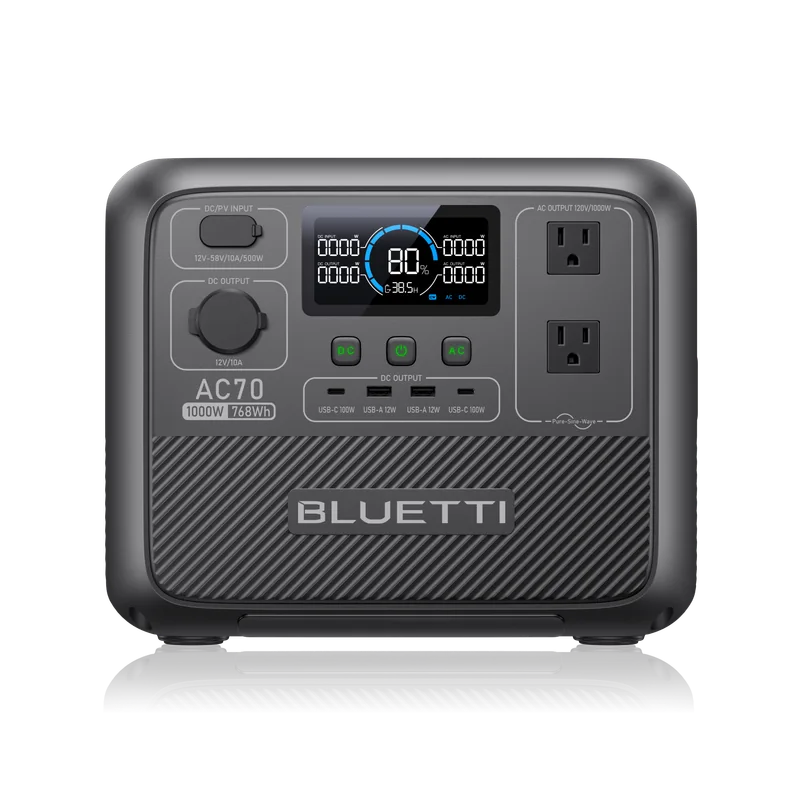
Best suited for: Solo campers, CPAP sleepers, and portable 12V fridge builds with solar panels
Bluetti · Ref B0CK649SGB
#8. Bluetti AC70 Portable Power Station
Drops carry weight to 22.5 lb with 768Wh LiFePO4 cells, 1,000W continuous AC (2,000W surge), and an unusually generous 500W MPPT solar window for fast midday panel top-ups.
- Capacity
- 768 Wh
- Continuous AC
- 1,000 W
- Chemistry
- LiFePO4
- Weight
- 22.5 lb
Why it makes the shortlist
Unlike entry sub-800Wh rivals capped at 200W solar input, AC70 recovers depleted battery hours rapidly from a pair of 200W folding panels at camp.
Buyer watchout
Two 120V AC outlets fill up fast; run CPAP machines from the regulated 12V DC car port to avoid AC inverter standby drain and save sockets.
Anti-Trap Filtering
What we dismissed & common 1000Wh buying traps.
1. Older 1,000Wh NMC stations (e.g., Yeti 1000X)
While legacy NMC packs like Goal Zero Yeti 1000X (983Wh, ~1,000 cycles) remain solid in specialty Anderson setups, LFP models in this 2026 shortlist triple cycle life with better thermal margins.
2. Chasing surge watts over continuous AC
Marketing badges often highlight 2,000–3,000W surge numbers. Always size resistance heaters, induction stoves, and coffee makers against the continuous watt limit—especially when contrasting 1,000W units against 1,800W workhorses.
How long will a 1000Wh LiFePO4 portable power station run a home refrigerator?
Apply an 85% real-world AC conversion factor first: a 1,024Wh to 1,152Wh station delivers roughly 870Wh to 979Wh usable energy. A modern 120V kitchen refrigerator drawing 55–85W average across compressor cycles runs roughly 11 to 16 hours before needing solar or wall recharging.
Why does BLUETTI AC180 (1,152Wh) sit above EcoFlow DELTA 2 (1,024Wh) if both have 1,800W inverters?
Both share 1,800W continuous inverters and LiFePO4 longevity, but AC180 holds 128Wh more onboard capacity (over an hour of fridge holdover) and enjoys quieter charging acoustics, while DELTA 2 wins if you specifically need 27 lb portability or extra-battery expansion.
Why did older ~1,000Wh NMC models miss this 2026 LiFePO4 list?
Legacy NMC stations typically rate around 500 to 1,000 full cycles to 80% health and tolerate heat poorly compared with modern 3,000–3,500+ cycle LiFePO4 (LFP) packs. At current 2026 street pricing, LFP stations deliver three to six times more useful battery lifespan.
Is 1,000W continuous AC enough, or should I demand 1,800W?
For laptops, Wi-Fi routers, CPAPs, and 12V coolers, 1,000W (e.g., BLUETTI AC70 or VTOMAN Jump 1000) works well. However, running full-size microwaves, air fryers, space heaters, or hair dryers requires an 1,800W–2,200W continuous inverter like AC180, DELTA 2, or Pecron E1500LFP.
How should I calibrate a new LiFePO4 power station during its first week?
Charge to 100% AC, run a moderate 200–400W load down near 5–10% to align BMS State-of-Charge sensors, then recharge to 100% once before storing around 60–80% SoC if kept only for seasonal outages.