
Source-verified power specs
Portable Power Stations & Solar Specs Analysis
Compare portable power stations, folding and rigid solar panels, and off-grid accessories using manufacturer manuals, exact retailer model checks, and transparent watt-hour runtime math.

Start with your setup
Choose the right category before comparing models.
Start in the equipment hub that matches how you store battery energy, collect solar power, or regulate DC loads.
Portable power stations
Compare capacity from 256 Wh camping boxes to 4,096 Wh home backup systems, inverter surge limits and weight.
Solar panels & kits
Compare folding portable panels and rigid RV arrays, check Voc voltage ceilings, and confirm single vs pair quantities.
Battery runtime calculator
Convert watt-hours and real appliance loads into transparent planning hours before shortlisting capacity.
Quick pick by scenario
Camping, RV boondocking & home outage sizing.
Buying a power station solely by peak watt numbers is the most common mistake. Size battery energy (Wh) for overnight duration first, then verify continuous AC watts and startup surge.
Weekend camping & tailgating (256 Wh – 768 Wh)
Compact units keep camera batteries, camp lights, phones and a single night of low-draw laptops or fans running without heavy lugging. Once you add a cycling 12V compressor fridge or CPAP machine, stepping up to 512 Wh–768 Wh dramatically improves safety margin—and checking the BLUETTI AC70 against the EcoFlow River 2 Pro clarifies 1,000 W vs 800 W inverter headroom and solar Voc windows.
- EcoFlow River 2 — ultralight 256 Wh / 300 W entry tier (7.7 lb)
- EcoFlow River 2 Max — balanced 512 Wh / 500 W overnight tier
- EcoFlow River 2 Pro vs BLUETTI AC70 — 768 Wh camping sweet spot
RV travel & emergency kitchen backup (1,024 Wh – 1,152 Wh)
Around 1 kWh is the inflection point where one unit can support a full-size kitchen refrigerator temporarily, run coffee makers or travel blenders safely on an 1,500–1,800 W pure-sine inverter, and accept 400–500 W of portable solar input. Check expandability vs built-in base capacity across the three leading mid-size workhorses before deciding whether a second battery pack matters later.
- EcoFlow DELTA 2 — 1,024 Wh, 1,800 W output, modular expansion path
- BLUETTI AC180 — 1,152 Wh, 1,800 W output (verify AC180 vs AC180P suffix)
- Jackery Explorer 1000 v2 vs Anker SOLIX C1000
Whole-home outage holdover & transfer switches (2,048 Wh – 4,096 Wh)
Sustaining refrigerators, sump pumps, well pumps or furnace blowers requires multi-kilowatt-hour storage and heavy-duty inverter ratings—plus checking wheel-kit portability around 50 to 113+ pounds. Start at EcoFlow DELTA 2 Max (2,048 Wh) for lighter circuit backup, or evaluate EcoFlow DELTA Pro (3,600 Wh), Anker SOLIX F3800 (3,840 Wh) and EcoFlow DELTA Pro 3 (4,096 Wh) when dual-voltage or high-capacity transfer-switch planning is needed.
Side-by-side matrix
Listed specifications across verified Tier A & B stations.
| Model & guide | Brand | Rated Wh | Continuous W | Surge W | Chemistry |
|---|---|---|---|---|---|
| EcoFlow River 2 Portable Power Station | EcoFlow | 256 Wh | 300 W | 600 W | LiFePO4 |
| Bluetti AC70 Portable Power Station | Bluetti | 768 Wh | 1,000 W | 2,000 W | LiFePO4 |
| EcoFlow River 2 Pro Portable Power Station | EcoFlow | 768 Wh | 800 W | 1,600 W | LiFePO4 |
| EcoFlow DELTA 2 Portable Power Station | EcoFlow | 1,024 Wh | 1,800 W | 2,700 W | LiFePO4 |
| Jackery Explorer 1000 v2 Portable Power Station | Jackery | 1,070 Wh | 1,500 W | 3,000 W | LiFePO4 |
| Anker SOLIX C1000 Portable Power Station (Black) | Anker | 1,056 Wh | 1,800 W | See guide | LiFePO4 |
| BLUETTI AC180 Portable Power Station | Bluetti | 1,152 Wh | 1,800 W | See guide | LiFePO4 |
| EcoFlow DELTA 2 Max Portable Power Station | EcoFlow | 2,048 Wh | 2,400 W | 4,800 W | LiFePO4 |
| EcoFlow DELTA Pro Portable Power Station | EcoFlow | 3,600 Wh | 3,600 W | 7,200 W | LiFePO4 |
| Anker SOLIX F3800 Portable Power Station | Anker | 3,840 Wh | 6,000 W | See guide | LiFePO4 |
| EcoFlow DELTA Pro 3 Portable Power Station | EcoFlow | 4,096 Wh | 4,000 W | 8,000 W | LiFePO4 |
Featured verified guides
Explore active options in detail.
Compare listed capacity, AC output and package constraints before confirming availability and delivery windows.
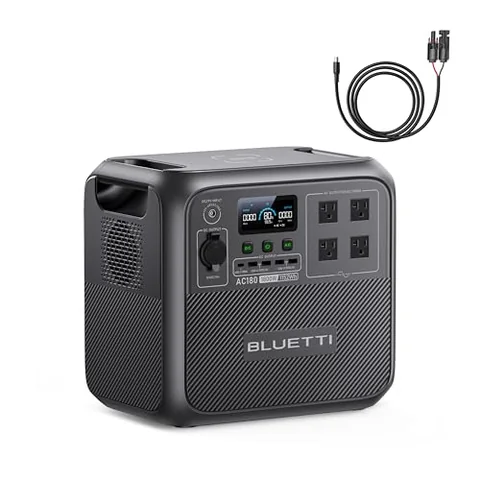
Bluetti / Buying guide
BLUETTI AC180 Portable Power Station
- Listed capacity
- 1,152 Wh
- Listed AC output
- 1,800 W
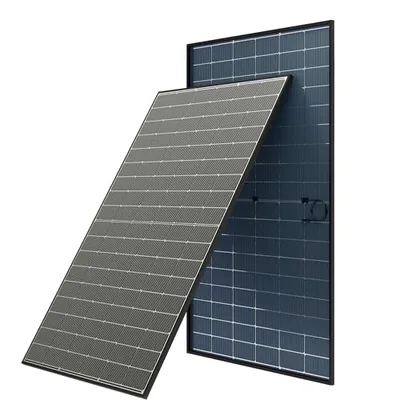
JJNSolar / Buying guide
JJN 850W Total (2Pcs 425W) Bifacial Solar Panels
- Panel count
- 2
- Rated power per panel
- 425 W
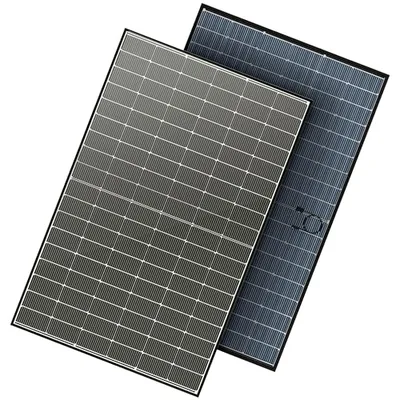
JJNSolar / Buying guide
JJN 425W N-Type Bifacial Rigid Solar Panel
- Panel count
- 1
- Rated power per panel
- 425 W
Solar panels & supporting hardware
Avoid MPPT voltage mismatches and package confusion.
Matching panels by wattage alone is risky: open-circuit voltage (Voc) spikes in cold sunlight and differs sharply between folding suitcases and rigid off-grid arrays.
Solar panel & kit guides
Check whether you need foldable portability for car camping or high-efficiency rigid N-Type bifacial frames for an RV roof or cabin mount, and confirm single-panel vs two-panel packages cleanly in our Portable & Rigid Solar Panels Hub.
Off-grid controllers & DC accessories
Standalone MPPT controllers, automotive cranking boosters and rechargeable DC camp fans are evaluated under their own electrical boundaries in our Off-Grid Accessories Hub—never confused with AC power station watt-hours.
The planning tool
Watt-hours. Made useful.
What does a 1,024 Wh battery mean for a 100 W cooler or CPAP setup? Adjust usable-energy assumptions and test your own load before picking a capacity bracket.
Calculate your runtimeAn illustrative calculation
8.7 hours
1,024 Wh × 85% ÷ 100 W Planning estimate using a constant load and assumed usable-energy fraction. Startup surges and standby inverter draw change real-world runtime.
Common buying questions
Key sizing & compatibility checks before choosing a setup.
LiFePO4 vs older lithium-ion (NCM) chemistry: what changes in practice?
Lithium iron phosphate (LiFePO4) cells listed in models such as the EcoFlow DELTA 2, BLUETTI AC180, and Jackery Explorer 1000 v2 are rated for thousands of charge cycles before reaching 80% capacity and offer higher thermal stability than older NCM packs. They usually weigh slightly more per watt-hour than legacy lithium-ion stations, so confirm carrying weight alongside cycle life.
Why does an appliance fail to start when battery watt-hours look large enough?
Watt-hours measure total stored energy over time, whereas continuous inverter watts and peak surge watts govern whether a device can start and run. Inductive motor loads such as full-size refrigerators, well pumps, and portable air conditioners draw a brief startup spike that can trip inverter overload protection even when a battery still shows 90% charge remaining.
How do you avoid damaging a power station when connecting third-party solar panels?
Match the open-circuit voltage (Voc) of your solar panel or wired array against the station MPPT input ceiling rather than comparing wattage alone. Cold weather increases panel Voc above standard test specs, so leave voltage headroom—especially when pairing higher-Voc rigid panels such as the JJN 425W or EcoFlow 400W Portable Solar Panel with compact power stations.
Why is real-world runtime shorter than rated watt-hours divided by watts?
DC-to-AC inverter conversion efficiency, AC inverter idle standby draw, battery temperature, and pack aging reduce net deliverable energy. Using an 85% usable-energy planning fraction on DC or low-loss loads—and an even more conservative margin for low-wattage 24-hour AC loads—yields a more realistic runtime estimate than raw nameplate capacity.
Read with confidence
How MES Reviews verifies specifications without hype.
Every guide traces specifications, model suffix ambiguities and package exclusions back to manufacturer documentation and verified exact-ASIN feeds—and openly flags any listing where figures conflict or need buyer confirmation. These guides do not invent hands-on runtime numbers.